Wednesday, 7 January 2015

Mohammad Hafeez

Mohammad Hafeez Biography

Full Name: Mohammad Hafeez
Date of Birth: Oct 17, 1980, Sargodha, Punjab
Major Team: Pakistan, Faisalabad, Faisalabad Wolves, Kolkata Knight Riders, Sargodha, Sui Gas Corporation of Pakistan
Playing Roll: All Rounder
Batting Style: Right
Bowling Style: Right-arm offbreak

Mohammad Hafeez is a Pakistani cricketer. He is a right-handed batsman and a right-arm offbreak bowler. Hafeez generally opens the batting and is also skillful boundary fielder. Hafeez was one of the several young all-rounders the Pakistani cricket team turned to after their poor Cricket World Cup display in 2003, in which they were eliminated in the first round. Hafeez scored a half-century on his Test debut against Bangladesh, and in his following Test hit a century. His form with bat and ball would then drop considerably and in late-2003 he was dropped from the Test squad, and soon after the ODI side. With strong domestic performances as well as good showings for the Pakistan A, he remained on the fringes of a recall in 2004. Hafeez returned to the ODI side in 2005 and despite not contributing with the bat, his bowling performances were impressive. In the 2006 Top End Series held in Australia, Hafeez smashed a century for Pakistan A. With Pakistan struggling to find a solid opening pair for Test cricket, Hafeez was recalled for the tour of England. His return to Test cricket was made at The Oval and he scored a fluent 95. Later that year in November, Hafeez retained his place in the side for their home series against the West Indies. After getting starts in the first two Test he would go on to score his 2nd Test century in the 3rd Test in Karachi.
Full name Mohammad Hafeez Born October 17, 1980, Sargodha, Punjab Current age 30 years 94 days Batting style Right-hand bat Bowling style Right-arm offbreak Mohammad Hafeez Picture Major teams Pakistan, Faisalabad, Faisalabad Wolves, Kolkata Knight Riders, Sargodha, Sui Gas Corporation... 
Major teams Pakistan, Faisalabad, Faisalabad Wolves, Kolkata Knight Riders, Sargodha, Sui Gas Corporation of Pakistan.
Mohammad Hafeez Profile
An opening batsman and a handy offspin bowler, Hafeez was one of the young players that the Pakistan selectors turned to after the team’s abysmal display in the 2003 World Cup. His performances in Sharjah and in the NatWest Challenge in England indicated that Hafeez could well be a long-term prospect – he showed good technique and temperament at the top of the order and bowled his offspinners tidily, but most impressive was his performance in the field. Patrolling the point and covers region with feverish alertness, he saved plenty of runs and pulled off an amazing catch. His organised approach towards batting ensured that he got an opportunity in the Test team in the three-Test series against Bangladesh. He didn’t do badly either, scoring a half-century on debut, and then stroking his first hundred in his second Test. However, his form then dipped alarmingly in the ODIs against South Africa, leading to his exclusion from the Test squad. Soon after he was dropped from the ODI squad as well. He has remained on the fringes of the national squad however with a string of impressive domestic performances, coupled with useful hands for the Pakistan A squad. He was called back to the ODI side in 2005 but failed to achieve any significant results. A spanking century for Pakistan A against Australia A in the Top End Series in Australia during the summer of 2006, allied with the exacerbtion of Pakistan’s opening problems on the tour to England, meant that Hafeez returned for the Oval Test annd amidst all debris, his calm and signficant 95 was all but forgotten. He has been adequate rather than spectacular though given the problems Pakistan have with openers, Hafeez is likely to remain involved for some time even with an ordinary average.
An opening batsman and a handy offspin bowler, Hafeez was one of the young players that the Pakistan selectors turned to after the team's abysmal display in the 2003 World Cup. His performances in Sharjah and in the NatWest Challenge in England indicated that Hafeez could well be a long-term prospect - he showed good technique and temperament at the top of the order and bowled his offspinners tidily, but most impressive was his performance in the field. Patrolling the point and covers region with feverish alertness, he saved plenty of runs and pulled off an amazing catch. His organised approach towards batting ensured that he got an opportunity in the Test team in the three-Test series against Bangladesh. He didn't do badly either, scoring a half-century on debut, and then stroking his first hundred in his second Test. However, his form then dipped alarmingly in the ODIs against South Africa, leading to his exclusion from the Test squad. Soon after he was dropped from the ODI squad as well. He has remained on the fringes of the national squad however with a string of impressive domestic performances, coupled with useful hands for the Pakistan A squad. He was called back to the ODI side in 2005 but failed to achieve any significant results. A spanking century for Pakistan A against Australia A in the Top End Series in Australia during the summer of 2006, allied with the exacerbtion of Pakistan's opening problems on the tour to England, meant that Hafeez returned for the Oval Test annd amidst all debris, his calm and signficant 95 was all but forgotten. He has been adequate rather than spectacular though given the problems Pakistan have with openers, Hafeez is likely to remain involved for some time even with an ordinary average.
Mohammad Hafeez Batting, Fielding and Bowling.

Mohammad Hafeez


                                      Mohammad Hafeez


                                      Mohammad Hafeez


                                      Mohammad Hafeez


                                      Mohammad Hafeez


                                      Mohammad Hafeez         


                                      Mohammad Hafeez         


                                      Mohammad Hafeez        


                                      Mohammad Hafeez            


                                      Mohammad Hafeez 

Mohammad Hafeez


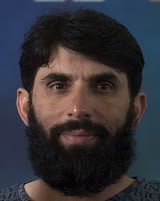
Misbah ul haq

Misbah Ul Haq Biography

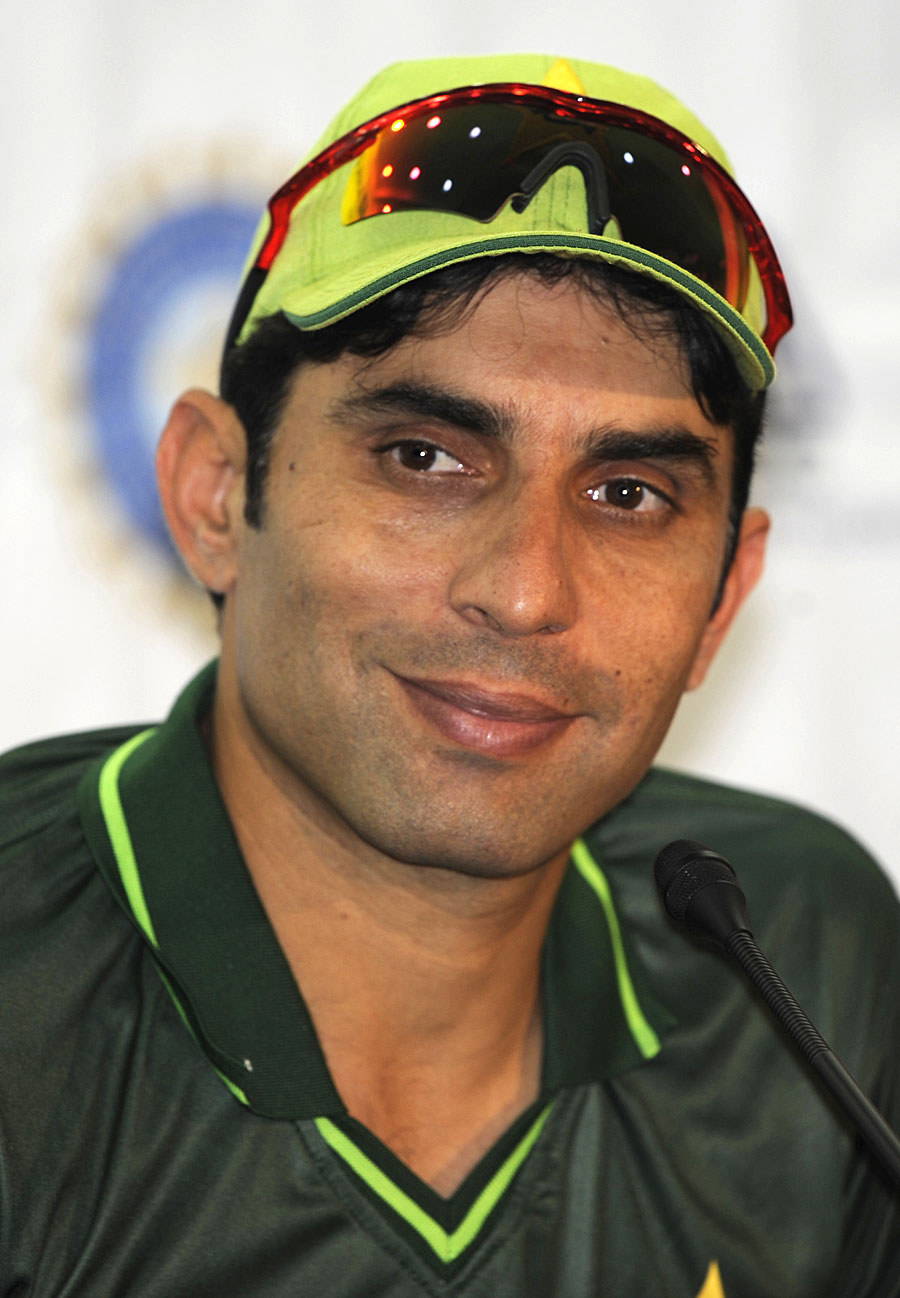
Misbah-ul-Haq Khan Niazi is a Pakistani cricketer and the captain of the Pakistan national cricket team for Tests and ODIs.

Early career
Misbah was initially noticed for his technique and his temperament in the Tri-nation tournament in Nairobi, Kenya in 2002, as he scored two fifties in the three innings in which he played, however, over the next three Tests he played against Australia, he failed to score more than twenty runs and was soon dumped from the team. Having witnessed Pakistan being eliminated in the opening phase of the 2003 Cricket World Cup, Misbah was part of the changes made to the team in the aftermath of these results, but failed to make much of an impact and was soon dropped again.

Comeback
At the age of 33, Misbah was chosen to play in the inaugural ICC World Twenty20 in 2007, filling the middle order spot vacated by Inzamam-ul-Haq. He had been regularly making runs in Pakistani domestic cricket and in the years before his recall he was consistently one of the top run scorers at each season's end, with his first-class average briefly climbing above 50.

Misbah was one of the stars of the tournament, playing a large part in many thrilling run chases. The first was in the group stage against India where he scored a half century in a tied match. He was run out attempting the winning run off the last ball of the match. In their Super 8s encounter with Australia he was named Man of the Match with an unbeaten 66 off 42 deliveries to see his side home with 5 balls to spare. Another unbeaten innings in the semi final against New Zealand saw Pakistan book a spot in the final against India.

He played an instrumental role in Pakistan's recovery in the inaugural 2007 ICC World Twenty20 final against arch-rivals India, with three sixes. He hit the first legitimate ball of the last over for six. With 6 runs needed to win off 4 remaining balls, Misbah tried to scoop the ball over short fine leg, but was caught out by Sreesanth. He repeated for the 3rd time against India in the semi final of the 2011 World Cup where India won by 29 runs.

Misbah scored his maiden Test hundred against India at Kolkata in the 2nd Test of the 2007 series. After India managed 616 in their first innings, Pakistan were at 5 for 150 in reply and in danger of following on when Misbah and Kamran Akmal put together a match saving 207 run stand. Misbah finished on 161 not out. In the 3rd & final Test of the series, Misbah made another fluent century this time finishing on 133 not out.

2008 began with some high points for Misbah as he was elevated to the post of Vice - Captain of the Pakistan team and was awarded a Grade A Contract. Since returning to International Cricket for Pakistan, Misbah has gone through a sustained patch of prolific run scoring. In his last 5 Test Match innings for Pakistan, he has notched up 458 runs at a very high batting average of 152.67 against India. In his last 5 ODIs as well, Misbah has made 190 Runs at an average of 63.33 & in Domestic Cricket for Punjab, he has amassed an astounding 586 runs at an average of 195.33 with 2 centuries and his highest first-class score of 208*.

Dropping out and the captaincy (2010-2011)
Misbah was dropped from the team after the 2010 ICC World Twenty20 and missed the team's controversial tour of England in August 2010 Due to the batting-collapses that Pakistan suffered during that tour Misbah was recalled for the subsequent tour against South Africa in the UAE to lead as a captain of the team for test series. Many people expressed there surprise at the appointment of Misbah as captain. Wasim Akram stated that although the decision was surprising if Misbah bats and fields well everything else will go according to plan. Former Pakistan coach Geoff Lawson stated that he believed Misbah has the best cricketing brain within Pakistan and he will do incredibly well in the plans for the captaincy Misbah hit back at those who criticised the decision to appoint him captain and stated that he should be given a chance to prove himself In his first match as test captain he set an example for his team when he scored 71* in a 168 run partnership with Younus Khan this helped Pakistan salvage a draw from the match

Two-test series in New Zealand (2011)
After Three Twenty20's in which Misbah did not play as Pakistan lost the series 2-1. He returned to captaining the test side and during his third test as captain he claimed his first victory when Pakistan beat New Zealand by 10 wickets. New Zealand were bowled out for 275 and during Pakistan's first innings Misbah reached a half-century before being trapped in front on 62, however Asad Shafiq top-scored in the innings with 83. Pakistan took a slender lead of 92 and bowled New Zealand out for 110 needing just 19 runs for victory and Pakistan sealed a crushing win when Taufeeq Umar sealed the winning run as Pakistan won by ten wickets and took a 1-0 lead in the series. The following match Misbah stated that the team's main focus was on improving themselves and that winning the series was a side focus. In the second and final Test of th series, Misbah yet again impressed with the bat. He was trapped in front just one short of a century in the first innings, with Pakistan taking a slender first innings lead. New Zealand posted 293 in their 2nd innings leaving Pakistan needing 274 to win on the findal day. An opening barrage from New Zealand's seamers left Pakistan struggling at 42-3, with Misbah joining Younis Khan at the crease. The two put on 118 runs and Misbah remained undefeated as Pakistan held out for a draw, finishing 226-5. This secured Pakistan's first Test series win since 2007 and helped raise Misbah's average as Captain to 112.75.


Misbah Ul Haq

                                  Misbah Ul Haq

                                  Misbah Ul Haq

                                  Misbah Ul Haq

                                 Misbah Ul Haq

                                 Misbah Ul Haq

                                 Misbah Ul Haq

                                 Misbah Ul Haq

                                 Misbah Ul Haq

                                 Misbah Ul Haq

Misbah Ul Haq  


Tuesday, 6 January 2015

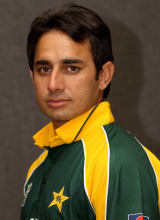
Saeed Ajmal

Saeed Ajmal Biography

Saeed Ajmal is a Pakistani cricketer. He is a right-arm off-spin bowler who also uses the Doosra to good effect.

Early life and domestic cricket
Ajmal has played for Faisalabad since his debut in 1995 at the age of 18, also representing Khan Research Laboratories and occasionally Islamabad. After a successful season in 2007–08 for Khan Research Laboratories, he was named in Pakistan's squad for the 2008 Asia Cup.

In a domestic match Faisalabad vs Rawalpindi , the Pindi coach told ajmal that camera footages could be sent to board . Thus Saeed did not bowl any doosra , as Pindi hampered to a win.

International career
He made his debut against India, taking the wicket of Yusuf Pathan in an eight-wicket before taking two wickets in a ten-wicket victory over Bangladesh, although the team had no chance of progressing to the competition's final.

From there he has had a rapid rise in the team in just over a full year. He had an excellent time at the 2009 ICC World Twenty20, bowling at an economical rate and regularly taking wickets along with his spin partner Shahid Afridi. He was then picked for the Sri Lankan series in Sri Lanka where he had made solid performances in the Test matches, being picked ahead of Danish Kaneria in two of the matches.

Ajmal's good form continued in the 2010 ICC World Twenty20 as he was Pakistan's leading wicket taker. However despite his good form he was known for conceding three sixes to Michael Hussey in what has been hailed as the most thrilling Twenty20 match of all time as Australia were in trouble and Ajmal was the unfortunate bowler who bowled that final over.

Shortly after this the Pakistan team began there long tour of England and in the two Test matches played against Australia spinner Danish Kaneria was selected ahead of him. In the 1st Test against England Kaneria was selected ahead of Ajmal as well. However after poor bowling by Kaneria, Ajmal was selected and he took his career best bowling figures of 5/82 Despite Pakistan restricting England the team suffered a top order collapse and Zulqarnain Haider scored 88 and Ajmal also showed that he has the abiltiy to bat when he scored 50 runs these two men helped Pakistan lead a revival after being bowled out for 72 on the first day. Along with Zulqarnain Haider they together continued to frustrate the England and when it was stumps on day three Pakistan had a 112-run lead however Zulqarnain Haider and Ajmal were out on 88 and 50 respectively and so Pakistan were left on the final wicket with Mohammad Asif and Umar Gul. During the series against England Pakistan became englufed in a spot fixing scandal after the fourth test and in a later secret interview it was unveiled by alleged fixer Mazhar Majeed that Ajmal, Abdul Razzaq, Younis Khan and Shahid Afridi were difficult to bribe. He stated that Ajmal was too religious to get involved into fixing.

Skills in the art of spin
“ "With HawkEye coming in, left-arm spinners slide the ball on for lbws. Offspinners get a lot of lbws from round the wicket, so you [batsman] have to work really hard, and a bloke who's got a doosra you have to work extra special hard. ”
—England batsman Kevin Pietersen

Ajmal is known as an excellent spinner of the ball and strong especially against left-handers. He has a well disguised doosra and keeps it as a mystery while he bowls. His technique is noted for causing more spin than speed as that is what Ajmal prefers Which in a sense is similar to Danish Kaneria who likes to bowl slow spin but Kaneria has a different case as when he picks up more speed he tends to loose the spin of the ball. When Pakistan started there tour of England in 2010 former Pakistani off-spinner and the founder of the doosra, Saqlain Mushtaq had a coaching session with Ajmal to advise him on his spin techniques Ajmal's spin technique came in special hand against England in 2010 has he took his first 5-wicket haul to help restrict England. Kevin Pietersen congratulated Ajmal on the amount of spin he achieved. Ajmal though started his international cricket in limited-overs cricket and was one of the early off-spinners to possess the skills of the doosra. A stat shows that out of Ajmal's 38 wickets in Twenty20 cricket 13 of them have been stumped the most for any bowler in the game. Also it was of Ajmal's off-break that Zulqarnain Haider collected his maiden international stumping.

In 2009, University of Western Australia test indicated that his arm is 8.5° tilted due to accident and 23.5° bowling action is allowed for him. Saeed Ajmal also said in an interview that he had learned the doosra on his own and that the rated Saqlain Mushtaq as the best off-spinner ever and rated Muttiah Muralitharan in second-place. He also stated that Muralitharan was a very nice and down to earth person. Ajmal said that he planned to introduce a new delivery at the 2011 Cricket World Cup

Saeed Ajmal

Saeed Ajmal

Saeed Ajmal

Saeed Ajmal

Saeed Ajmal

Saeed Ajmal

Saeed Ajmal

Saeed Ajmal

Saeed Ajmal 

   Saeed Ajmal  


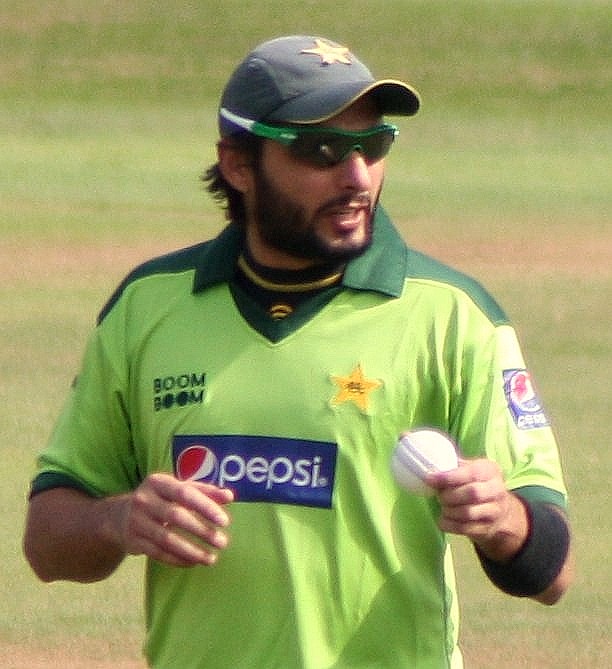
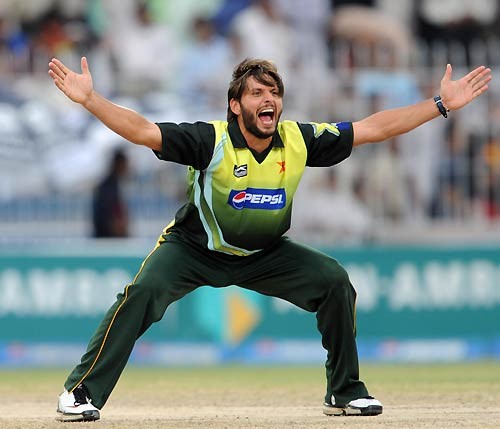
Shahid Afridi

Shahid Afridi Biography

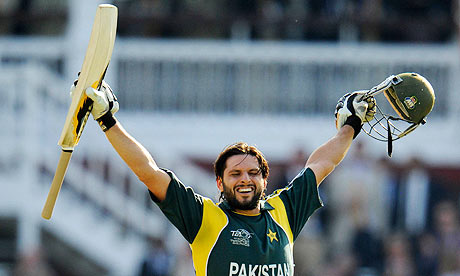
ahibzada Mohammad Shahid Khan Afridi born in Khyber Agency of the Federally Administered Tribal Areas, Pakistan), popularly known as Shahid Afridi is a Pakistani cricketer. Between 1996 and 2011, Afridi played 27 Tests, 325 One Day Internationals, and 43 Twenty20 Internationals (T20Is) for the Pakistani national team. He made his ODI debut on 2 October 1996 against Kenya and his Test debut on 22 October 1998 against Australia.

He is known for his aggressive batting style, and holds the record for the fastest ODI century which he made in his first international innings, as well as scoring 32 runs in a single over, the second highest scoring over ever in an ODI. He also holds the distinction of having hit the most number of sixes in the history of ODI cricket. Afridi considers himself a better bowler than batsman, and has taken 48 Test wickets and over 300 in ODIs. Currently Afridi is the leading wicket taker in the Twenty20 format taking 53 wickets from 43 matches.

In June 2009 Afridi took over the Twenty20 captaincy from Younus Khan, and was later appointed ODI captain for the 2010 Asia Cup. In his first match as ODI captain against Sri Lanka he scored a century however Pakistan still lost by 16 runs. He then also took over the Test captaincy but resigned after one match in charge citing lack of form and ability to play Test cricket; at the same time he announced his retirement from Tests. He retained the captaincy in limited-overs form of the game and led the team in the 2011 World Cup. Amongst his highlights while captaining Pakistan include leading the team to their first ODI series win in two-years. In May 2011, having led Pakistan in 34 ODIs Afridi was replaced as captain. Later that month he announced his conditional retirement from international cricket in protest against his treatment by the Pakistan Cricket Board (PCB).

Afridi is from the Afridi tribe of the Khyber Agency in the Federally Administered Tribal Areas and hails from a Pashtun family. He is married and has two daughters, Aqsa and Ansha.

In October 1996 at the age of sixteen Afridi was drafted into the ODI team during the four-nation Sameer Cup 1996–97 as a leg spinner as a replacement for the injured Mushtaq Ahmed. He made his debut on 2 October against Kenya, however he didn't bat and went wicketless. In the next match against Sri Lanka, Afridi batted at number three in the role of a pinch-hitter. In his first international innings, Afridi broke the record for fastest century in ODI cricket, reaching his hundred from 37 balls. The eleven sixes he struck also equalled the record for most in an ODI innings. Aged 16 years and 217 days, Afridi became the youngest player to score an ODI century. Pakistan posted a total of 371, at the time the second-highest in ODIs, and won by 82 runs; Afridi was named man of the match.

Two years after appearing on the international scene, Afridi made his Test debut in the third game of a three-match series against Australia on 22 October 1998. By this point he had already played 66 ODIs, at the time a record before playing Tests. He opened the batting, making scores of 10 and 6, and took five wickets in the first innings. He played his second Test the following January during Pakistan's tour of India; it was the first Test between the two countries since 1990. Again opening the batting, Afridi scored his maiden Test century, scoring 141 runs from 191 balls. In the same match he also claimed three wickets for 54 runs. After winning the first match by 12 runs, Pakistan lost the second to draw the series.

In 2001, Afridi signed a contract to represent Leicestershire. In five first-class matches he scored 295 runs at an average of 42.14, including a highest score of 164, and took 11 wickets at an average of 46.45; Afridi also played 11 one day matches for the club, scoring 481 runs at an average of 40.08 and taking 18 wickets at 24.04. His highest score of 95 came from 58 balls in a semi-final of the C&G Trophy to help Leicestershire beat Lancashire by seven wickets.Derbyshire County Cricket Club signed Afridi to play for them in the first two months of the 2003 English cricket season. In June 2004 Afridi signed with English county side Kent to play for them in three Twenty20 matches and one Totesport League match.

Afridi made his presence felt in the third Test against India in March 2005, scoring a quick-fire second-innings half-century and taking five wickets in the match (including Tendulkar twice) to help Pakistan to win the game and register a series draw. In April Afridi struck what at the time was the equal second-fastest century in ODIs; he reached 100 off 45 deliveries against India, sharing the record with West Indian Brian Lara. Afridi was more consistent with his batting and bowling throughout 2005, starting with the tours of India and West Indies and through to the England tour. The Pakistani coach Bob Woolmer helped Afridi to reach a fuller potential by improving his shot selection and giving him free rein over his batting attitude.

On 21 November 2005, Shahid Afridi was banned for a Test match and two ODIs for deliberately damaging the pitch in the second match of the three-Test series against England. TV cameras pictured him scraping his boots on the pitch scuffing the surface when play was held up after a gas canister exploded. Afridi later pleaded guilty to a level three breach of the ICC code of conduct relating to the spirit of the game. Inquiries were made and Afridi's antics came into view. He was investigated and banned after the day's play, along with receiving a huge amount of criticism from the cricketing world for bringing the game into disrepute. Match referee Roshan Mahanama said: "This ban should serve as a message to players that this type of behaviour is not allowed." On this Afridi accepted his fault and said that a "senior player like me should set good examples to others because they see us to learn." His behaviour was also condemned by the Pakistan Cricket Board.

On 12 April 2006, Afridi announced a temporary retirement from Test cricket so that he could concentrate on ODIs, with a particular focus on the 2007 World Cup, and to spend more time with his family. He said he would consider reversing his decision after the World Cup. Afridi had played ten Tests since being recalled to the side in January 2005, averaging 47.44 with the bat including four centuries. However, on 27 April he reversed his decision, saying that "[Woolmer] told me that I am one of the main players in the team and squad and that Pakistan really needed me". Before Pakistan toured England in July to September, Afridi played for Ireland as an overseas player in the C&G Trophy. In six matches, he scored 128 runs and took seven wickets. England won the four-match Test series 3–0; Afridi played two matches, scoring 49 runs and took three wickets. It was the last Test cricket Afridi played until 2010.

Afridi was charged on 8 February 2007 of bringing the game into disrepute after he was seen on camera thrusting his bat at a spectator who swore at him on his way up the steps after being dismissed. Afridi was given a four-game ODI suspension, the minimum possible ban for such an offence, meaning that he would miss Pakistan's first two 2007 World Cup matches. The PCB and Afridi chose not to appeal the ban, despite feeling that the punishment was excessively harsh.

In the 2007 World Twenty20, he performed poorly with the bat but brilliantly with the ball, earning the Man of the Series award, though he failed to take a wicket in the final and was out for a golden duck.But in the next ICC Twenty20 World Cup, held in 2009 Afridi performed brilliantly in the series scoring 50 runs in the semi-final and 54 in the final and leading his team to victory.

On 30 May Afridi announced his conditional retirement from international cricket in protest against his treatment by the PCB. The condition on his return was that the board be replaced. The PCB suspended Afridi's central contract, fined him 4.5 million rupees ($52,300), and revoked his no-objection certificate (NOC) which allowed Afridi to play for Hampshire. Afridi filed a petition with the Sindh High Court to overturn the sanctions. On June 15, Afridi withdrew his petition after an out of court settlement and the PCB reinstated his NOC.


Shahid Afridi
                                                                              
                 
Shahid Afridi


                                                                                        Shahid Afridi  
                                                                         
                                                                                      
 Shahid Afridi 


Shahid Afridi


Shahid Afridi


Shahid Afridi


Shahid Afridi


Shahid Afridi


Shahid Afridi


Shahid Afridi


  Shahid Afridi